
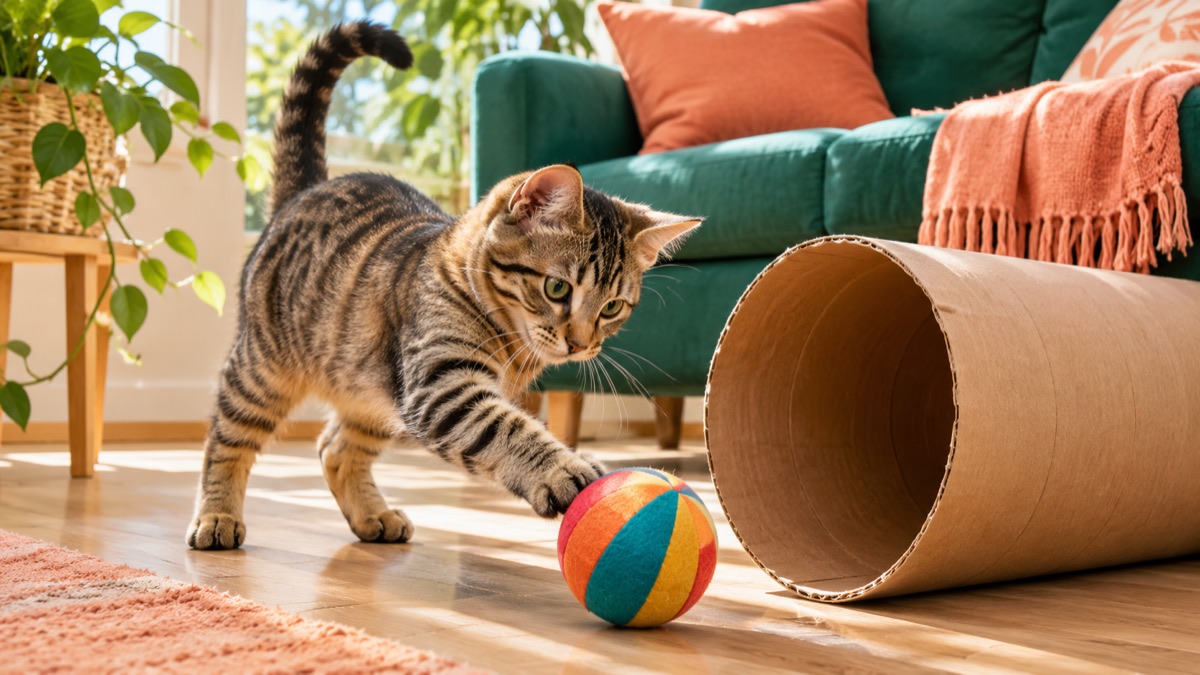
The most useful cat enrichment ideas give your cat opportunities to explore, play, scratch, forage, watch, and rest on their own terms. You can begin with a safe cardboard box and a better play routine instead of ordering an entire miniature adventure park. This guide offers fifteen practical ideas, explains how to choose between them, and shows how to tell whether an activity is actually useful for your cat. The goal is an interesting daily life, not a living room full of expensive objects receiving one-star reviews from a very unimpressed furry customer.
Start With the Cat You Actually Live With
Enrichment means making the environment and daily activities better suited to the animal’s needs. It includes opportunities for normal behavior and choices about interaction, not just additional exercise. The Feline Veterinary Medical Association’s environmental-needs guide describes the importance of appropriate resources and control over social interactions. A cat who wants a peaceful retreat may benefit more from an undisturbed hiding place than another noisy gadget.
Begin by noticing what your cat already chooses. Does a paper bag inspire exploration, does a moving toy prompt stalking, or is a sunny elevated resting spot the major attraction? Record the situation without deciding that every inactive moment means boredom. A new reluctance to play, jump, eat, or interact can have medical explanations. If you see a significant change, veterinary advice comes before trying to solve it with a more elaborate toy.
Choose one or two manageable activities rather than installing all fifteen at once. Ohio State’s Indoor Pet Initiative treats the home as a collection of resources, including resting areas, scratching opportunities, perches, and play. Think of your first changes as filling a useful gap. The table below gives an editorial starting point for matching ideas to observations, not a test that assigns your cat a fixed personality.
| What you notice | An idea to try | What a useful response might look like |
|---|---|---|
| Watching from elevated furniture | Stable perch with a safe view | Voluntarily resting and looking around |
| Investigating containers | Safe open box or simple puzzle | Comfortable exploration without getting trapped |
| Following small movements | Short supervised toy session | Watching, stalking, or choosing to engage |
| Seeking quieter rooms | Undisturbed resting choice | Using the space and leaving freely |
Fifteen Cat Enrichment Ideas to Try at Home
The ideas below range from free changes to optional products. Adjust difficulty and access to your cat’s age, mobility, eating plan, and preferences, and supervise unfamiliar items before considering independent use. There is no prize for choosing the most complicated activity. The useful option is the one your cat can enjoy safely and that you can keep available consistently.
Make a Plain Cardboard Box Interesting
Offer a clean, sturdy box with a clear opening and remove staples, loose tape, string, and other detachable pieces. Place it where the cat can investigate without being approached from every side, and leave them free to ignore it. The ASPCA’s DIY enrichment suggestions include simple household approaches rather than relying exclusively on purchased toys. Start with the empty box before making the game harder; an uncomplicated hiding place is already doing a useful job.
Create a Comfortable Watching Spot
A stable resting surface beside a safely closed window can provide a place to observe the changing scene outside. Check the route up and down, keep cords out of reach, and make sure the furniture cannot slide or topple. The RSPCA’s indoor-cat guidance discusses providing an appropriate home environment, including opportunities beyond the floor. If the view consistently seems upsetting rather than interesting, offer a different location instead of assuming more stimulation must always be better.
For a dedicated seat, our guide to choosing a window bed for cats compares mounting styles, fit, and maintenance before you buy. A secure route and a view the cat enjoys matter more than choosing the most photogenic cushion.

Play With Movement Rather Than Constant Waving
Try a short supervised session in which an appropriate toy moves away, pauses, and becomes available to catch. Watch whether your cat prefers small movements along the floor or another safe pattern, rather than repeatedly waving the toy directly in their face. Ohio State’s toy guidance explains the value of play that engages stalking and pouncing. Let observation guide the pace, and finish before either participant has lost interest in the arrangement.
Rotate Some Toys Without Hiding Every Favorite
Keep a small selection available and put some other safe toys away for later rotation. The aim is to offer a change in opportunities, not to remove a familiar item the cat clearly likes having nearby. Inspect toys before bringing them back into use and replace damaged ones. A simple basket with a few options can make rotation easier to maintain than a complicated calendar, especially when several household members share the job of playing with the cat.
Introduce a Food Puzzle at an Easy Level
Begin with a small portion of the cat’s normal appropriate food in a puzzle they can understand without struggling. Count that food within the day’s feeding plan instead of automatically adding extra calories. The Cat Adoption Team’s adopter guide describes introducing food puzzles gradually and keeping the first tasks easy. If the cat cannot obtain the food or becomes frustrated, make the task easier and keep their ordinary access to adequate food reliable.
Try a Supervised Search in a Small Area
Place a few suitable pieces of food where the cat can easily see and retrieve them, then gradually increase the challenge if the activity works for them. Avoid inaccessible gaps, fabric pockets, and locations where food will be forgotten. Keep the experiment short enough that you can account for what was offered and remove leftovers. This is a practical application of foraging rather than a reason to distribute dinner unpredictably around the entire house.
The manufacturer’s Digger page explains the cup-based design and cleaning features. We have not tested this product, and a food puzzle is optional; a simple, safe introduction can help you assess interest before spending money. Do not interpret a refusal as failure. A cat may prefer a different food, an easier task, or an entirely different kind of activity.
Add a Scratching Choice Near a Useful Place
Scratching opportunities belong in a richer home environment alongside play and rest. Compare vertical and horizontal options with the surfaces your cat already chooses, and put the alternative where it is genuinely accessible. Our guide to stopping furniture scratching explains the observations that make this decision more useful. The object should provide a satisfying movement and stay stable, rather than simply filling a decorative gap beside a plant stand.
Offer a Route to a Safe Raised Resting Area
Look at the journey as well as the destination when considering climbing furniture. A useful raised platform needs an accessible route up, a comfortable place to settle, and a manageable way down. A cat with mobility difficulties may need a different arrangement from an athletic young adult, so seek veterinary advice when jumping ability changes. Our cat-tree sizing and stability guide helps separate usable space from impressive-looking product height.

Make One Resting Place Properly Undisturbed
A quiet retreat works best when everyone understands that the resting cat can remain there without being pulled into interaction. Choose a comfortable location and keep the route in and out open. Blue Cross’s indoor-cat advice includes providing an environment that supports the cat’s normal needs. Rest is part of enrichment, even when it produces less entertaining footage than a dramatic toy chase across the hallway.

Use a Paper Bag With the Handles Removed
A suitable paper bag can become a supervised place to investigate, provided handles, loose pieces, and other entanglement risks are removed. Keep the opening clear and check how the cat interacts with the material. Cornell’s safe-toy guidance highlights both inexpensive options and the need to assess hazards. Remove the bag if chewing, tearing, or another behavior makes it unsuitable for that cat.
Give the Cat a Choice About Social Time
Invite interaction in a way your cat already enjoys, then allow them to approach, pause, or leave. That might mean sitting nearby, offering a familiar game, or ending contact when they disengage. The important feature is the available choice, rather than achieving a target number of minutes of affection. Ask other household members to follow the same approach so a quiet invitation from one person is not followed by an unwanted cuddle from another.
Try a Very Simple Training Game
A brief voluntary game can begin with something easy, such as approaching a suitable target or moving to a familiar resting mat for an appropriate reward. Keep the task achievable and avoid physically positioning the cat. FelineVMA’s behavior resources connect appropriate environments with learning and positive interactions. If you are new to training, seek guidance from a qualified professional rather than borrowing techniques designed for a different animal or a completely different situation.
Offer Individual Play Opportunities in a Multi-Cat Home
When one cat consistently takes over a shared game, consider whether another cat would engage more comfortably in a separate appropriate space. Observe whether each animal gets a genuine chance to participate rather than counting a single energetic session as enrichment for everyone. Keep resources and access available during the arrangement. Separate play is a practical option to assess, not proof that the cats have a specific relationship problem or that they must be isolated routinely.
Change a Small Detail Instead of the Entire Room
Try introducing one safe object or one new arrangement while leaving familiar resources predictable. For example, move a supervised box game to a different suitable location while keeping the cat’s usual resting places available. A manageable change gives you a clearer comparison than a weekend makeover involving every resource. If the cat avoids the change, restore an appropriate familiar option and reconsider the difficulty, location, or timing without escalating the experiment.
Make Inspection Part of the Activity
Before offering toys, check for loose components, damaged coverings, exposed fasteners, and cords that can be chewed or swallowed. Cornell advises particular care with small parts and linear materials such as string, so supervised toys need to be stored safely afterward. A toy that was suitable last month may be damaged now. Put the inspection and storage supplies near the activity area so safe use is part of the ordinary routine rather than an easily forgotten extra step.
Build a Routine That Fits an Ordinary Week
Choose a repeatable opportunity around the household’s real schedule, such as a short game before an evening meal or an easy puzzle while you can supervise. Ohio State’s activity guidance recommends making play part of a daily routine and sharing the responsibility. Start with a commitment you can sustain. A modest, consistent arrangement is more useful than an ambitious plan that disappears as soon as work becomes busy.

Match expectations to the individual cat rather than demanding a spectacular performance. Watching, stalking, sniffing, and choosing to rest can all tell you something about how an option is being used. Keep a simple note of the activity, approximate timing, and the cat’s response. If the cat chooses the box while the premium toy remains untouched, that is useful information about this setup. It is not an invitation to buy a premium box.
Use the notes to decide what deserves to stay. Keep options that are safe, practical, and voluntarily used, and reconsider those that repeatedly create frustration or maintenance problems. If you try several changes, document them separately so you know which one was associated with a useful response. You can then spend money on filling a specific gap instead of collecting products in the hope that one will eventually explain the cat.
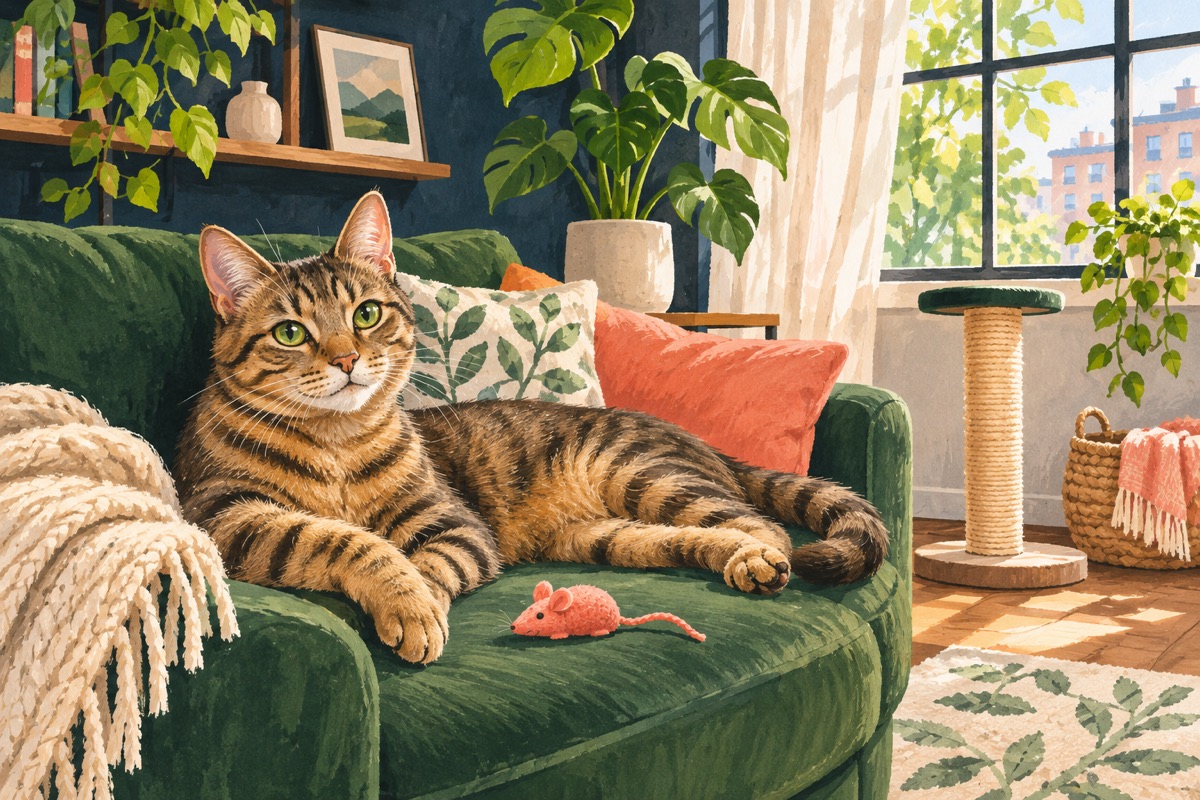
Make the plan easy for a second person to follow. Keep a note of which toys need supervision, where they are stored afterward, and how much of the normal food allowance is being used in puzzles. If several people offer treats independently, the activity can become difficult to track. A short shared note prevents that confusion without turning play into paperwork. It also helps a caregiver preserve familiar opportunities when you are away, so the cat is not suddenly presented with a completely different routine simply because another person has taken over.
Cat Enrichment Questions Worth Asking
The best questions focus on what the cat needs and what you can provide safely. These answers help narrow a starting point without suggesting that one toy or timetable can suit every household.
Do I Need to Buy an Automatic Toy?
No particular electronic gadget is essential to begin offering more useful opportunities. Start with resources and supervised activities you can assess, including safe household options when appropriate. If you choose a powered toy, check the instructions, moving parts, battery compartment, and your cat’s actual response. Automation can be convenient, but it does not remove the need to inspect and maintain the item.
How Do I Know Whether My Cat Is Bored?
You cannot reliably diagnose boredom from one behavior or a social-media checklist. Look at the full environment and any changes in normal behavior, and ask a veterinarian when activity, appetite, toileting, or social interactions change. Introduce appropriate choices while avoiding claims that enrichment alone treats a medical or behavioral condition. A useful home review and a medical assessment can complement each other when necessary.
What Should I Try First in a Small Apartment?
Choose one missing opportunity rather than trying to recreate every idea in a limited room. A safe viewing spot, a suitable scratcher, or a brief supervised game can be a manageable starting point, depending on what is already available. Protect routes to food, water, and litter boxes while arranging the space. Floor area is only one part of the plan, but access and safety still matter at every height.
Keep the Ideas That Your Cat Actually Uses
Good cat enrichment ideas make ordinary days more interesting while preserving comfort, choice, and safety. Start small, supervise unfamiliar activities, and learn from voluntary use rather than judging the setup by its shopping total. Maintain reliable essential resources, ask for veterinary advice when behavior changes, and keep the routine simple enough to repeat. The successful result may look like a peaceful cat in a perfectly ordinary box, which is a respectable outcome even if the box did not arrive with an app.