
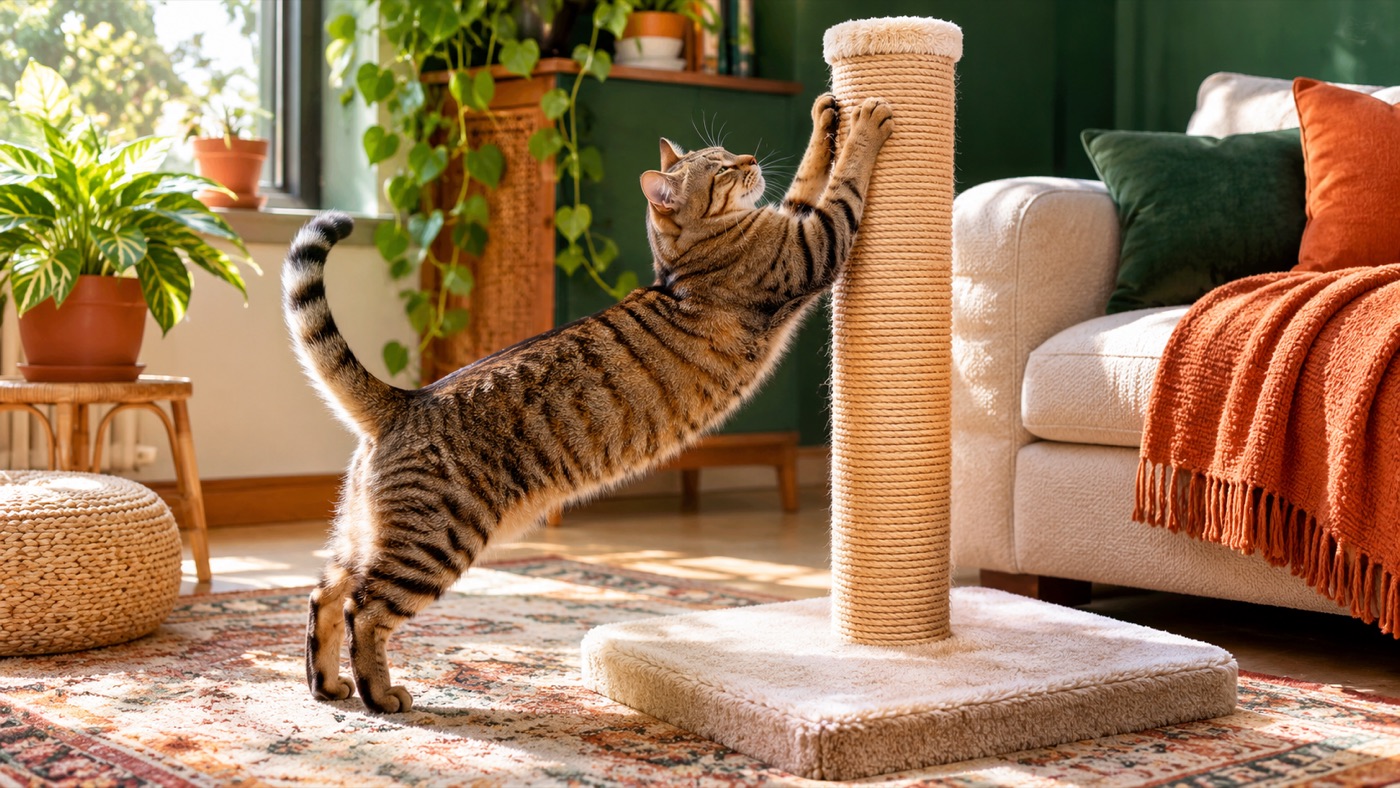
To stop cats from scratching furniture, give them an appealing scratching surface exactly where the unwanted scratching happens, reward them for using it, and protect the furniture while the new habit develops. The trick is understanding what the sofa already offers: the right texture, a sturdy surface, and a prime location in your cat’s daily routine. This guide helps you choose better alternatives, run a sensible home experiment, and recognize when a behavior change deserves professional help. Your cat can keep the claws and the enthusiasm; your armchair deserves a less adventurous future.
Why the Sofa Keeps Winning
Scratching is normal feline behavior, not a campaign against your interior design. It helps cats care for their claws, stretch, and leave visual and scent messages, as Cats Protection explains. That makes the real question practical: which approved object can provide the same satisfying experience? A tiny post behind the laundry basket has a difficult assignment when the alternative is a large, immovable sofa in the center of family life.
Spend a little time watching before ordering anything. Notice whether your cat scratches upright, stretches forward over the carpet, or works along an angled surface. Record the object, time, and direction rather than simply writing “being naughty.” These observations turn a frustrating mystery into a small design problem. A useful note might say, “After the afternoon nap, front paws high on the sofa arm.” That description already tells you more than a shopping search for the most popular cat accessory.
It also helps to separate scratching furniture from scratching skin or repeatedly scratching the body. Those are different problems and can require different assessments. This article addresses damage to household surfaces. If your cat is injuring people, itching persistently, or showing a sudden change in behavior, start with your veterinarian rather than assuming the scratching-post plan covers everything.
Match the Scratcher to the Habit
Look for an alternative that matches the direction your cat already chooses. Upright scratchers suit a cat reaching up the side of a chair, while flat pads give a carpet enthusiast a more comparable option. Battersea’s furniture-scratching advice emphasizes providing suitable scratching opportunities rather than expecting the behavior to vanish. The comparison below translates that principle into questions you can answer at home.
| Current target | Alternative to investigate | What to check |
|---|---|---|
| Vertical sofa arm | Tall upright scratcher | Full stretch and a base that stays still |
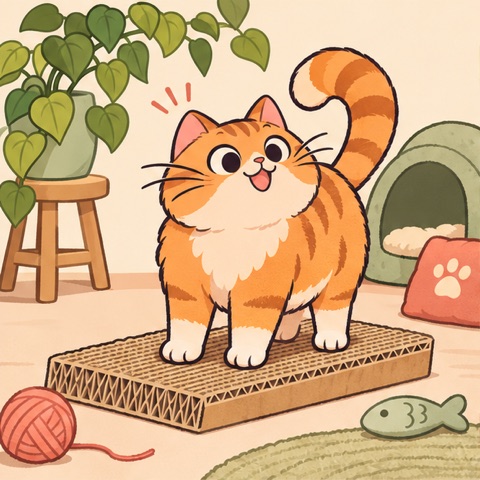
| Carpet or rug | Horizontal scratching pad | A usable surface large enough for the movement |
| Angled furniture edge | Angled scratcher or ramp | A stable angle similar to the preferred target |
| Several rooms | Multiple scratching stations | Access near the actual resting and activity areas |
Do not confuse total product height with usable scratching height. Decorative ears, a toy on a string, or a perch above the column might make the listing taller without giving the cat more room to stretch. Compare the uninterrupted scratching section with your cat’s actual posture. A product photograph can hide this distinction, especially when the model cat is a kitten. The relevant measurement is the space your particular cat can use.
Texture is another variable worth treating separately. Sisal, cardboard, and other purpose-made surfaces can feel very different under the claws. Begin with a small number of genuinely different options instead of buying several nearly identical posts. If the first one is ignored, that does not prove your cat rejects all scratchers. It may tell you that one material, direction, or location was a poor match.
If the damage is concentrated on floor coverings, our guide to cats scratching carpet explains doorway protection, horizontal alternatives, and how to test a better setup. It applies the same needs-first approach to the surfaces that sit under your feet.
Put the Alternative Where It Has a Chance
The new scratcher should initially be convenient to the established target, even if that is not the position you would choose for a room photograph. Cats Protection recommends placing a post beside the scratched area and considering locations near resting places. Your sofa is already on the cat’s route. Let the alternative compete on that route before asking the cat to make a special trip to another room.
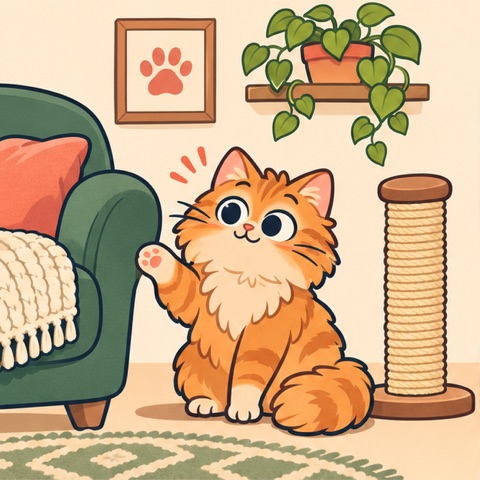
Try looking at the space from floor level. Is the scratcher behind a swinging door, beside a noisy appliance, or tucked so tightly between furniture that a full stretch is awkward? Does someone need to move it every evening? A permanent, predictable location makes your experiment easier to interpret. If the setup changes constantly, you cannot tell whether the cat is responding to the object or simply finding it unavailable.
In a home with several cats, think about access rather than ownership labels. Writing one cat’s name on a post will not stop another cat sitting beside it like a nightclub bouncer. Separate opportunities in different useful places can be more practical than concentrating everything in one corner. For a broader look at arranging climbing and resting resources, see our cat-tree buying guide.
Make Stability a Buying Requirement
A scratcher that shifts during a full-body pull has a problem that attractive upholstery cannot fix. PDSA recommends sturdy posts with room for a full stretch. Before use, assemble the product exactly as directed and check that the base sits flat on the intended floor. Recheck fittings according to the manufacturer’s instructions rather than assuming the first assembly is the last maintenance job.
Think about the route around the base as well as the column itself. A post can feel substantial in your hands but still be awkward when wedged on the edge of a rug or placed where people regularly knock it. Test the location without involving the cat first. If the object rocks, catches a door, or creates a tripping hazard, solve that problem before trying to build a positive association with it.
The manufacturer’s SmartCat product page is useful for checking the model rather than relying on a shortened marketplace title. We have not tested this post, and the card is a product example rather than a claim that it is the best scratcher for every household. If your cat consistently scratches horizontally, a different design may be the more sensible purchase. Buy for the observed movement, not for the number of enthusiastic adjectives in the listing.
Reward the Behavior You Want to See Again
Make it worthwhile when the cat voluntarily investigates or uses the approved surface. A reward can be a small suitable treat, attention the cat enjoys, or a brief favorite game. AAHA describes positive reinforcement as part of managing scratching. The important practical detail is timing: keep the response connected to use of the scratcher rather than waiting until the cat has wandered into the kitchen.
Set yourself up to notice success. If rewards live in an inaccessible cupboard, you may miss the brief moment you wanted to encourage. Keep any food rewards securely stored where the cat cannot help themselves, but convenient for you. Tell other people in the home what counts as success so the response is consistent. A quiet, repeatable routine is more useful than an occasional celebration that startles the cat halfway through a stretch.
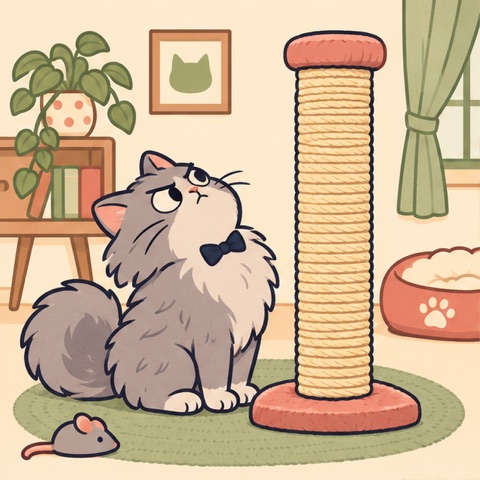
Avoid moving the cat’s paws against the post to demonstrate the job. Cats Protection specifically cautions against this approach, which can make the object less appealing. Let the cat investigate without being physically positioned. You can make the area interesting with an appropriate supervised game nearby, then give the cat space to choose what happens next.

Protect Furniture Without Turning the Room Into a Trap
Furniture protection buys time while the alternative becomes useful. A purpose-made protector should be suitable for the upholstery, securely fitted, and used according to its instructions. Start with a small hidden compatibility check when the manufacturer recommends one. The goal is to protect the material without adding loose pieces, exposed adhesive, or a new object your cat can chew. A practical solution should make the room easier to live in for everyone.
Consider access management as a temporary option when damage is severe. If a room can be closed safely, provide the cat’s necessary resources elsewhere and avoid suddenly removing access to all their familiar resting places. Do not create a situation where the cat must pass through an intimidating area to reach food, water, or a litter box. Our cat enrichment ideas guide can help you think about the rest of the environment rather than treating the scratched chair in isolation.
Be wary of an internet recipe that promises to make every surface cat-proof. Strong smells, essential oils, and improvised mixtures are not a substitute for a verified pet-safe product used correctly. A deterrent also cannot teach the cat where scratching is welcome. If your plan consists only of making the furniture unpleasant, you have solved half the design problem and left the cat to choose the next target.
How to Stop Cats From Scratching Furniture at Home
Change one major feature at a time when it is practical to do so. For example, keep the same post and material while moving it beside the sofa, then observe whether use changes. If you replace the post, introduce a new scent, rearrange the room, and change the reward all on the same afternoon, any improvement is harder to explain. You do not need a laboratory; you need a note you can understand next week.
Record both wanted and unwanted scratching, including brief successes. A useful entry might read, “Used upright post after waking, scratched sofa later during evening activity.” That is more informative than declaring the whole day a failure. Photograph the setup so you remember the exact placement. If you later seek professional advice, these observations can make the discussion more specific than a general report that nothing works.
There is no honest universal deadline for changing an established habit. Look for a trend in the situations you are actually monitoring, and adjust the setup when it gives you useful information. If the cat avoids the post every time it wobbles, address the wobble promptly rather than continuing the same test. If furniture damage increases or the cat seems distressed, pause the experiment and seek help instead of escalating the deterrents.
Give the household one shared plan. If one person rewards the post, another moves it out of the way, and a third chases the cat away from the whole corner, the setup becomes difficult to interpret. Agree on where the scratcher stays and what a successful interaction looks like. Put a small reward container somewhere appropriate and out of the cat’s reach so the chosen response is easy to repeat. Consistency here is a practical household arrangement, not a demand that everyone monitor the cat all day.
When Scratching Deserves a Bigger Conversation
A sudden increase can happen alongside changes in the household, unfamiliar animals, or other sources of stress, but a blog cannot identify the cause in an individual cat. PDSA advises discussing signs of stress with a veterinarian. Describe what changed and when, including any changes in appetite, toileting, grooming, movement, or social behavior. These details are more useful than a diagnosis guessed from a short video.
Declawing is not a routine furniture-protection solution. The ASPCA’s position statement explains the permanence of the procedure and the importance of nonsurgical alternatives. Ask your veterinary team for help with safe claw care, environmental changes, and referral when appropriate. A more appealing scratcher and a better-informed plan address the household problem without pretending normal scratching is a defect in the cat.
Keep the shopping decision separate from the evidence of progress. If a horizontal pad beside the rug is getting regular use, replacing it with a fashionable vertical post may remove the very feature that helped. You can improve the appearance of the arrangement later while preserving the direction, stability, and convenient position. A practical home does not need to become a showroom for every scratcher you have tried. Once an option works and remains safe, maintenance and consistent access can be the next useful jobs.
Questions People Ask Before Buying Another Post
These are common decision points once you have observed the scratching pattern. The answers depend on the cat’s actual preferences and the setup you can offer, so use them to narrow the next experiment rather than as promises of a guaranteed result.
Why Does My Cat Ignore an Expensive Scratching Post?
Price does not establish that the material, direction, height, or location suits your cat. Compare the post with the surface the cat already chooses, especially stability and usable stretching room. An inexpensive flat pad might be a better comparison for a carpet scratcher than a luxurious upright tower. Review the match before assuming the cat needs an even more expensive version.
Should I Remove the Old Post Immediately?
If a post is damaged or unsafe, follow the manufacturer’s advice and replace or repair it appropriately. If it remains safe and the cat uses it, adding an alternative alongside it can help you observe preferences without removing a familiar resource. Keep any experiment manageable and inspect both options. The point is to improve useful choices rather than win an argument about which object looks newest.
Will a Cat Tree Solve the Problem?
A cat tree can provide a scratching surface, but only if that surface actually works for the movement your cat wants to make. A cluster of short columns between platforms may not replace a long uninterrupted stretch. Compare the scratching section separately from the climbing and sleeping features. A dedicated post can still be useful beside a tree that is otherwise an excellent perch.
A Better Deal for the Cat and the Sofa
The most useful plan begins with observation, then gives the cat a convincing alternative in the right place. Match the direction, make the surface stable, reward voluntary use, and protect vulnerable furniture while you learn what works. Keep the notes simple enough to maintain, and ask for professional help when the pattern changes suddenly or the household is struggling. A sofa with fewer claw marks is a sensible goal; it does not require your cat to stop being a cat.