
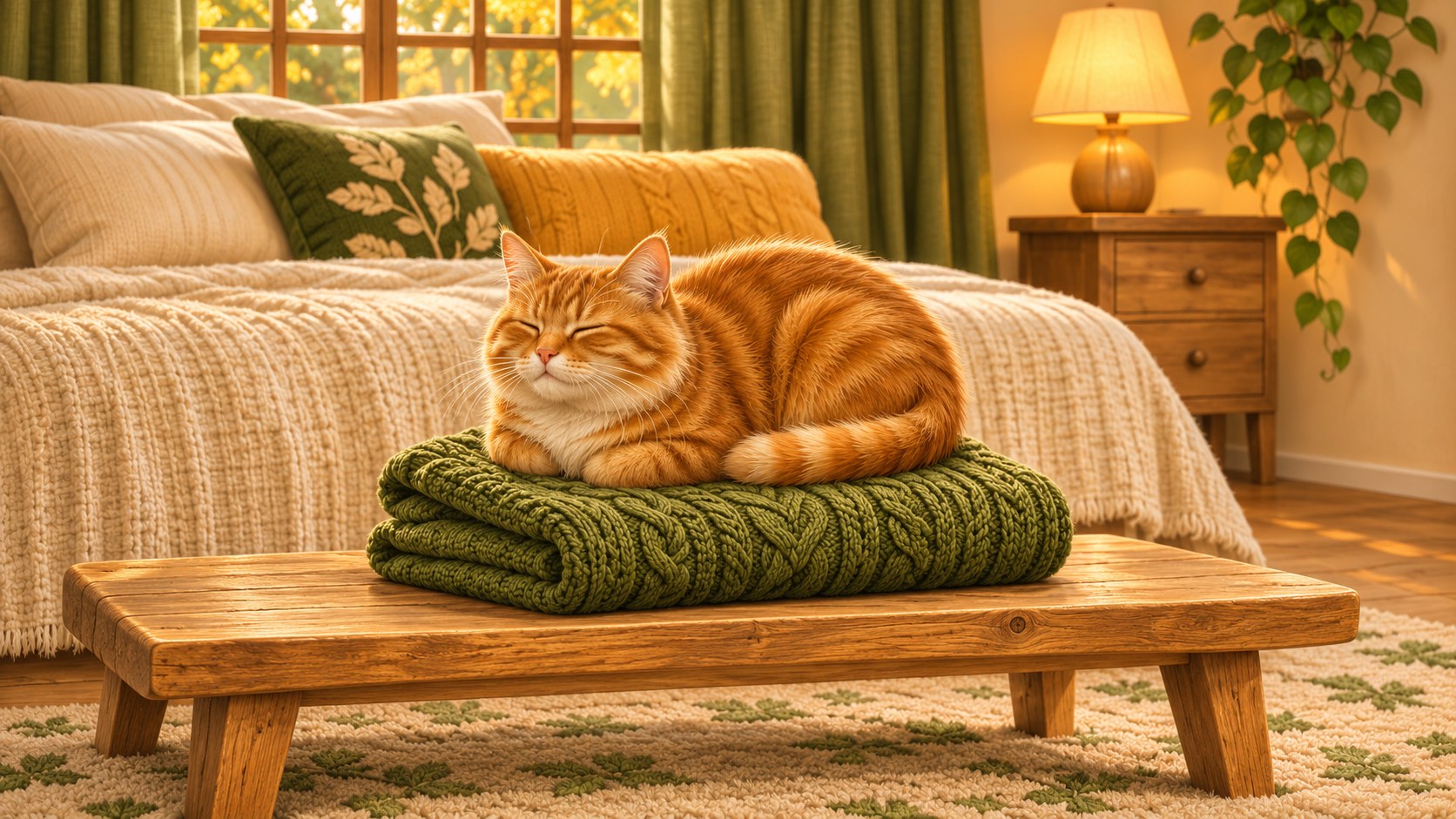
You bought a cat bed. Your cat chose the shirt you need in eight minutes, pressed it into a mattress and opened a private sleep clinic. Why do cats sleep on your clothes, especially when several perfectly respectable resting places are available? Softness, familiar smells and the location of the clothing can all matter, but one nap does not reveal a single secret message. This guide helps you understand the habit, protect the clothes you want to wear and create appealing alternatives without turning bedtime into a battle. We will also separate an ordinary laundry nap from chewing, sudden hiding or other changes that deserve attention.
The Shirt Might Be Comfortable, Familiar or Convenient
A sweater combines several things a cat may enjoy in one convenient parcel. It is soft, may carry a familiar smell and often sits exactly where the household activity is happening. Cats Protection’s explanation of cats sitting on belongings identifies comfort, warmth and scent among the reasons cats choose clothing and other objects. It also explains that a trusted person’s smell may be associated with safety. Those are plausible explanations for your cat’s choice, not a way to translate every nap into a precise emotional statement.
Notice the difference between a possible explanation and a conclusion. A cat sleeping on your clothes is not automatically lonely, anxious, possessive or trying to dominate your wardrobe. You do not need to pick the most dramatic interpretation to respond helpfully. Start with what you can observe: the material, the place, the time and what else is available. Your cat has chosen a sleeping surface, not submitted a written account of their inner life.
Why Cats Sleep on Your Clothes: Read the Setting
Compare several occasions rather than investigating a single sweater incident. Does your cat choose any soft pile, only clothes on the bed or a particular spot inside a closet? Look for practical differences before changing anything. The table below is an editorial observation guide, not a diagnostic tool. It helps you choose a small experiment while keeping the cat’s ordinary access to comfortable resting places intact.
| What You Notice | Possible Attraction | A Practical Experiment |
|---|---|---|
| Many kinds of soft clothing are chosen | Surface comfort | Offer a suitable washable blanket in the same safe area |
| A quiet closet shelf is preferred | Shelter or location | Offer an accessible covered resting option with a clear exit |
| Clothes near you are chosen | Location and proximity | Place another resting surface nearby, without forcing contact |
| A new bed is ignored | Unfamiliar position, shape or access | Change one feature and observe before buying another bed |
| Fabric is chewed or swallowed | A different concern from sleeping | Restrict access to the material and contact your veterinarian |
Keep a short note if the pattern is difficult to remember. Something like “green sweater on low bench after breakfast” is useful; “hates expensive beds” is entertaining but less specific. Record what happened without repeatedly moving the cat to test their commitment. A comfortable animal does not need to participate in a household research project every time they close their eyes. Your observations should make the next change simpler, not make their rest less peaceful.
Match the Location Before Shopping for Another Bed
Look at where the ignored cat bed sits. Is it beside a noisy appliance, behind a door, away from the people your cat likes or difficult to enter? An expensive bed in an inconvenient location still has an inconvenient location. Try an appropriate existing blanket in a safe nearby spot before ordering a replacement. This is a practical comparison you can make in your own home, not a claim that every cat prefers one specific fabric or bed style.
Our window bed guide can help if your cat seems to prefer a view, while the cat tree buying guide covers usable platforms and access. Neither purchase is necessary just because your shirt has become popular. First decide what feature you are trying to offer: a quiet corner, a supported surface, a sheltered area or a different outlook. Shopping is easier when the product has a defined job beyond being the next hopeful object on the floor.
Offer an Alternative Without Evicting a Sleeping Cat
Set up the alternative while your cat is elsewhere and let them investigate voluntarily. Place it where it is safe and practical, keeping familiar resting spots available during the transition. If you want a particular shirt protected, put it away before the next nap rather than repeatedly lifting a sleeping cat from it. Cats Protection’s sleep advice recommends leaving sleeping cats undisturbed and providing comfortable places to rest. Your laundry deadline is understandable, but prevention is a kinder strategy than making every nap a surprise relocation.
Observe whether the alternative is actually used. If not, change one practical feature, such as its location or entry height, before concluding that your cat has rejected the entire category of beds. Avoid placing them in it repeatedly or blocking their route away. A sleeping place should remain a choice. You can be pleased when the new setup gets a visit without immediately treating the first sniff as a signed lifelong tenancy agreement.
A Familiar Blanket Can Be a Reasonable Compromise
You may decide that one suitable washable blanket can belong to the cat while the work shirts return to closed storage. Choose something intact that your cat does not chew or unravel, and inspect it during cleaning. Keep strings, decorations and other detachable details out of the arrangement. The aim is a simple resting surface you can maintain, not a sentimental garment you will be upset to find covered in fur. A negotiated blanket is often easier to live with than an ongoing argument about a cardigan.
Do not add perfume, essential oils or fabric fragrance to make the bed more attractive. Familiarity does not require stronger smells. The environmental needs guidelines from AAFP and ISFM include respecting cats’ sense of smell and providing safe resting options. Keep cleaning compatible with the material’s instructions and your cat’s needs. If you are unsure whether a product is appropriate around your cat, check with your veterinarian instead of experimenting with a scented shortcut.
Protect the Clothes Before the Cat Finds Them
Give clean clothes a destination once they are ready to put away. A closed drawer or an appropriate closed wardrobe keeps the decision simple: the cat cannot choose a shirt that is not available. Before shutting any storage space, physically check that your cat is elsewhere. Do not rely on having seen them in another room several minutes ago. Cats can move very quietly when a promising shelf becomes available, particularly while you are distracted by folding.
A lidded hamper can help contain worn clothing, provided it closes securely, has no accessible snagging loops and is used according to its design. It is a storage choice, not an animal enclosure. Avoid making the hamper attractive as a hideout and then shutting the lid over an occupant. Put clothing away in small batches if that makes the task easier. You are managing access to fabric, not attempting to persuade a cat that office dress codes outrank naps.
Make the Laundry Area Less Interesting to Explore
Check machines before loading and starting them, and keep your cat away from open appliances while you work. The Cat Fanciers’ Association’s household-hazard guidance notes that exploring cats can become shut in dryers and other enclosed areas. An empty warm-looking space is not a safe bed just because a cat can climb into it. Make appliance checks part of the routine for everyone who uses the laundry area, including visitors or family members who do not usually handle it.
Keep detergents, softeners and dryer sheets in secure storage. ASPCA’s guidance on corrosive household products identifies concerns with dryer sheets and fabric softeners, including injury from certain ingredients and swallowed material. Do not offer a used dryer sheet as a toy or rub one on a pet as a grooming trick. If you suspect an exposure or ingestion, contact your veterinarian promptly. A laundry nap may be harmless, but the supplies nearby do not automatically belong in the cat’s play area.
Sleeping on Fabric Is Different From Eating It
A cat curled on a sweater is doing something different from a cat repeatedly chewing holes in it or swallowing threads. VCA Animal Hospitals’ explanation of pica describes persistent ingestion of non-food material, including fabric and string. If you notice missing fabric, repeated chewing or suspected swallowing, prevent further access and seek veterinary guidance. Do not assume the behavior is simply an unusually enthusiastic version of kneading. It needs its own assessment rather than a more expensive blanket.
Tell the veterinarian what material was involved, what you actually saw and approximately when it happened. Save the remaining item for identification if practical, without delaying care to stage a photograph. Follow professional instructions rather than trying home remedies or pulling on visible thread. If your cat seems unwell, has repeated vomiting or has trouble eating, seek urgent advice. This article cannot determine whether material has been swallowed or whether an obstruction is present.

What if the Closet Becomes a Permanent Hideout?
A familiar resting place and a new pattern of withdrawing are worth distinguishing. Compare your cat with their own usual routine rather than with a video of another animal being sociable. Are they eating, using the litter tray and moving around as expected, or has something changed? Cats Protection’s sleep guidance recommends checking with a veterinarian when sleep or hiding increases noticeably. Mention changes in behavior even if you have also found a very convincing explanation involving a new sweater.
If the room has become busier or the household has changed, note that context too. Provide accessible alternatives and let the cat approach company on their terms, rather than dragging them from a hiding spot to demonstrate that everything is fine. The RSPCA’s indoor-cat guidance discusses choice, enrichment and interaction that respects the animal. It is a useful framework for considering the rest of the home. A quiet sleeping corner matters, but it should not be the only comfortable place the cat can access.
Keep a Good Routine When You Go Out
A favorite sweater can be part of a comfortable environment, but it is not a substitute for food, water, accessible litter or human care. If you are preparing to leave, our leaving your cat home checklist walks through the practical checks. Use any resting material only if it is suitable for your particular cat. The right arrangement is one they can use safely while their other needs are met, rather than a sentimental object expected to solve the whole day.
When you return, look at how the arrangement held up. If the blanket was ignored and your cat chose a different safe surface, that is information rather than a failed relationship. If they used the alternative, keep it convenient to maintain. Small improvements can be worthwhile without producing an immediate before-and-after transformation. Your cat does not owe the new bed a glowing review because you carefully matched it to the curtains.
A Peace Treaty for Your Sweater
The workable solution usually starts with access and choice: put the protected clothes away, offer a suitable resting surface and watch what your cat actually uses. Consider softness, location and familiarity without claiming to know a single hidden motive. Keep laundry hazards secure, take chewing seriously and ask for veterinary advice when behavior changes. That leaves room for the ordinary explanation that the sweater was simply an excellent place for a nap.
You can love the cat and still want to wear a shirt without a full fur lining. Give the cat a comfortable option, give the clothes a closed destination and keep the arrangement simple enough to repeat. If the cat chooses the safe cardboard box instead of the new bed, you have still provided a useful choice. The cat has somewhere to sleep, and your outfit may finally be available at the time you planned to leave.