
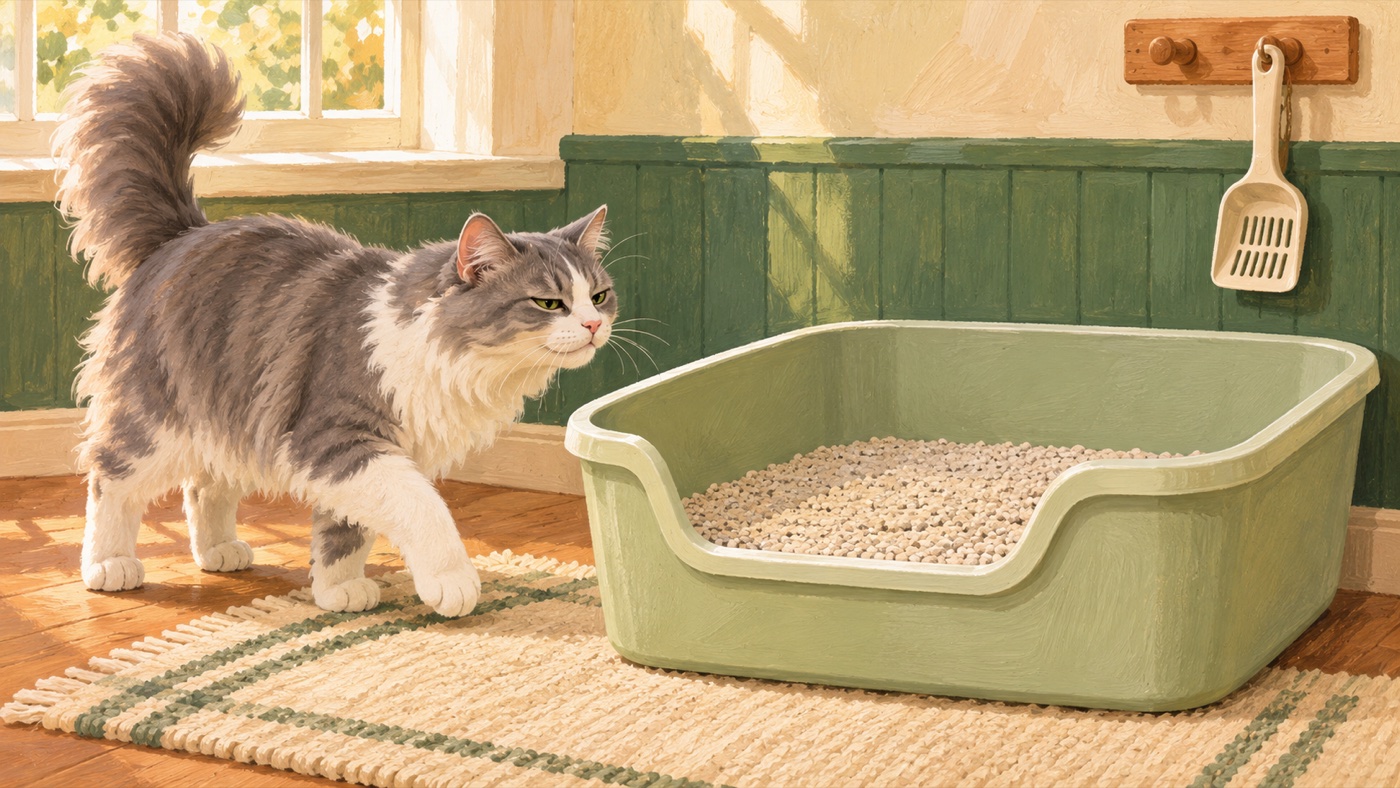
A good litter box setup gives your cat enough room, a comfortable entrance, a quiet location, and a clean surface they are willing to use. Start with the cat’s needs before choosing the box that best matches the bathroom tiles. This guide explains how to compare sizes and styles, arrange boxes in a small home, build a realistic cleaning routine, and troubleshoot changes without blaming the cat. The aim is an ordinary, dependable toilet that works every day, which is considerably more useful than a beautiful box your cat has formally declined.
What a Reliable Litter Box Setup Includes
Think of the setup as a combination of box, litter, location, and maintenance. Any one of those can become the weak link, so buying a different tray without reviewing the rest may not address the problem. Cornell’s house-soiling guide explains that medical issues, aversion to a box, and preferences for other places can all contribute to accidents. A new purchase cannot distinguish those causes for you.
Before changing an established arrangement, write down what you currently have. Include the number of cats, the number and position of boxes, the litter type, entrance height, and cleaning schedule. If your cat is already comfortable and consistent, there may be no reason to replace the system because another design is trending. Practical cat care is allowed to be a little boring. Predictable access and an achievable routine matter more than a dramatic before-and-after photograph.
Use the table as an initial review, then work through the details below. The suggestions summarize guidance from AAHA’s general litter-box considerations and Cornell, rather than a promise that one arrangement suits every animal. Your cat’s mobility, existing preferences, and relationships with other cats can change the most sensible choice.
| Part of the setup | Useful starting point | Question to answer at home |
|---|---|---|
| Number | One per cat, plus an extra | Are useful alternatives actually accessible? |
| Size | Generous usable interior | Can the cat enter, turn, and position comfortably? |
| Entrance | Suitable for the cat’s mobility | Does reaching the litter require an awkward climb? |
| Location | Quiet, convenient, and predictable | Can another pet block the route? |
| Cleaning | Regular scooping and appropriate washing | Can everyone responsible maintain the routine? |
Choose Size From the Inside Out
Marketplace labels such as large, jumbo, and extra-large are product names, not measurements of your cat. Check the usable inside dimensions rather than relying only on the outside footprint. Molded storage compartments, a tapered base, or an inward-curving rim can make the standing area smaller than the longest advertised measurement. If the listing does not distinguish those dimensions, ask the seller or manufacturer before treating the box as a good fit.
AAHA notes that many commercially available boxes offer less space than recommended. Instead of shopping by the smallest place the tray could fit, watch how your cat turns and positions in the current box. A cat whose body is pressed against the sides may have limited options even when all four paws technically fit. For a proposed new box, mark its footprint on the floor with removable paper before ordering. You will quickly see whether it leaves sensible access for the cat and for cleaning.
Entrance height deserves its own decision. A high-sided box may help contain some kicked litter, but the entry must still be manageable for the individual cat. Kittens and cats with mobility difficulties can have different requirements from an athletic adult. If your cat hesitates at an entrance or has begun avoiding a previously manageable step, discuss that change with your veterinarian. Do not interpret difficulty getting in as a failure to understand the rules.

Decide Between Open and Covered Styles
An open tray makes it easier for you to inspect the contents and see whether the cat has room to turn. A covered design can be useful in some homes, but the usable enclosure must be assessed separately from its outside appearance. The ASPCA’s litter-box guidance discusses preferences for different boxes and locations. Your cat’s behavior is more informative than a universal claim that all cats love privacy or all cats dislike covers.
If you want to compare styles, provide an alternative without immediately removing the box the cat reliably uses. Keep other variables as similar as practical so you can tell what changed. A new cover, a new litter scent, and a new room introduced together create an unnecessarily complicated experiment. Let the cat investigate in their own time. A successful setup does not require a ceremonial demonstration involving being placed inside the tray.
Be especially careful with furniture enclosures designed to conceal litter boxes. The cabinet may restrict the box size, ventilation, cleaning access, and the cat’s route in and out. A unit that looks spacious with its doors open may feel very different during normal use. Sketch the complete route, including the room entrance and nearby furniture, before buying. Hidden from human view should not mean difficult for the cat to reach or difficult for you to maintain.
Place Boxes Where They Can Be Used Comfortably
A useful location balances quiet with convenient access. A little-used room may seem perfect until the door is closed for half the day, and a laundry area may change suddenly when an appliance starts. Walk the actual route at the times your household is busiest. Notice doors, stairs, other animals, and any narrow passage the cat must negotiate. The location on a floor plan matters less than what happens around it.
Keep toilet areas separate from feeding and drinking areas rather than creating a single compact station for human convenience. The Feline Veterinary Medical Association’s environmental guidance emphasizes appropriate arrangements of essential resources. In a small apartment, separation may mean using different usable zones rather than different rooms. A floor-level sketch can help you find possibilities that are not obvious when looking only for empty corners.
Do not choose a spot that becomes inaccessible whenever guests stay or children play. A setup works best when everyone knows which doors need to remain open and which routes need to stay clear. Consider the space needed to lift a cover, scoop, and wash the box as well. If routine maintenance requires dismantling half the bathroom, the arrangement is likely to become annoying long before the cat has offered an opinion.
The Amazon listing for this ASIN currently identifies a Petmate XL open litter box; marketplace titles and selectable variants can change. Compare the actual dimensions and model details before ordering, and use the manufacturer’s litter-box range to check which design you are considering. We have not tested this box. A large open pan is a starting point for comparison, not a treatment for litter-box avoidance.
Work Out How Many Boxes Your Home Needs
The familiar starting guideline is one box for each cat plus an additional box. AAHA presents this as a rule of thumb, with consideration for social groups when those relationships are understood. The arrangement matters alongside the total. Three trays crowded together in one difficult-to-reach room do not provide the same practical alternatives as accessible options in useful locations. Think about routes and access, especially when cats do not comfortably share space.

In a multi-level home, consider whether the cat can comfortably reach a box from the places they actually spend time. A box on the other floor is less convenient when a door is shut or a cat is reluctant to use the stairs. Watch for one animal waiting outside a room or controlling a passage. These observations do not establish a diagnosis of conflict, but they are useful details to raise with a veterinary professional.
If space is limited, prioritize workable options rather than quietly giving up on the guideline. Reconsider furniture placement, unused areas, and how boxes can be kept accessible without becoming household obstacles. Avoid placing extra boxes where they will be moved repeatedly because they are in everyone’s way. For the broader arrangement of resting, climbing, and play areas, our cat enrichment ideas provide a useful companion to this setup review.

Introduce Litter Changes Carefully
If you know which litter your cat uses comfortably, record that information before making changes. Texture, scent, and depth are separate variables, and a familiar-looking bag can still contain a different formulation. Cornell describes litter preferences and aversions as possible parts of house-soiling problems. Avoid assuming a highly scented product solves an issue simply because it smells better to the humans standing beside the tray.
When comparing products, preserve a familiar option where practical and follow advice appropriate to your cat’s situation. If a veterinarian has recommended a particular litter or monitoring arrangement, that takes priority over a general blog suggestion. For an otherwise stable setup, keep a simple record of what was changed and whether use remained consistent. The least expensive experiment is often the one that avoids changing several things at once.
Read disposal directions rather than assuming every product can be flushed, composted, or placed in a garden. The substrate, packaging guidance, and local waste arrangements all matter. Store the scoop and spare litter so they are easy to reach without creating a mess or a chewing opportunity. A convenient routine is more likely to survive a busy weekday than a system that requires searching the home for the necessary supplies.
Build a Cleaning Routine You Can Sustain
Regular scooping is a basic part of litter-box care, and Ohio State’s Indoor Pet Initiative includes daily cleaning among the essentials. Check boxes consistently rather than relying on whether the room smells noticeable. A recurring household task or simple shared reminder can make responsibility clear. The important feature of the schedule is that someone actually follows it, including during weekends, travel, and busy work periods.
Wash the tray and replace litter as appropriate for the product and the cat’s needs, using the manufacturer’s instructions and veterinary guidance when relevant. Rinse and dry components properly before reassembly. Never mix cleaning chemicals, and keep the cat away while products are being used as directed. A stronger fragrance is not evidence of a more suitable cleaning process. If a tray is damaged or difficult to clean effectively, replacement may be more useful than another scented additive.
Check the surrounding area as part of the same routine. Litter trapped under a mat, residue beside a wall, and a scoop stored in an awkward place can make the whole station unpleasant to maintain. Consider whether a washable mat helps in your particular location without narrowing the entrance or becoming a slipping hazard. Improve the practical workflow before buying several accessories that compete for the same small patch of floor.

When Accidents Need Veterinary Attention
A new toileting problem should not automatically be treated as disobedience or a dislike of the latest litter. Cornell explains that painful urination, digestive problems, mobility changes, and other medical issues can affect box use. Arrange veterinary advice when the pattern changes, even if the existing setup has worked for years. Mention the timing, frequency, and any changes in eating, drinking, movement, or the appearance of urine or stool.
Repeated attempts to urinate with little or no urine, straining, or obvious distress can indicate an emergency. Contact a veterinarian immediately rather than spending the day comparing boxes or trying home remedies. A blocked urinary tract can be life-threatening, particularly in male cats, as Cornell’s lower urinary tract disease guidance explains. This is the point where a shopping guide must stop being the next step.
Prepare a simple handover when someone else will care for the cat. Explain which boxes are normally used, the litter to replenish, where waste goes, and which changes should prompt a call to you or the veterinary team. Leave supplies in a clearly identified place and check that the person can access every station. An unfamiliar caregiver should not have to guess whether a closed door is deliberate or whether a different bag of litter is interchangeable. This small bit of preparation protects the routine during travel without introducing another product.
Litter Box Setup Questions
Once the essentials are in place, small decisions become easier to evaluate. Use these answers to guide a practical review rather than treating them as substitutes for your cat’s history or veterinary advice.
Is a Bigger Box Always Better?
More usable room can help when the existing tray is cramped, but a very large box with an inaccessible entrance can still be unsuitable. Compare internal space, entry height, location, and cleaning access together. A label saying giant does not answer those questions. Choose a design that your cat can comfortably reach and use in the space where it will remain.
Can I Keep Two Boxes Beside Each Other?
They may be useful in some circumstances, but side-by-side trays still depend on the same route and room access. Consider whether a separate location would offer a meaningful alternative, especially with more than one cat. Watch the actual use rather than assuming the count alone proves the arrangement works. A professional familiar with your household can help when space or social relationships complicate the decision.
Should I Move the Box When Guests Visit?
Plan guest arrangements around maintaining the cat’s reliable access whenever possible. If a change is necessary, provide an appropriate alternative and consider the transition rather than relocating the only box without warning. Tell everyone responsible for the home what needs to remain available. A predictable system is easier for both the cat and the person who has to explain where the spare scoop disappeared.
Keep the Toilet Ordinary and Dependable
The best outcome is a litter box setup that quietly works: comfortable room, easy access, suitable litter, and consistent maintenance. Review the whole arrangement before assuming the solution is a more elaborate product, and take changes in toileting seriously. For another everyday resource worth getting right, read our guide to stopping furniture scratching with better alternatives. Good cat care often comes down to making normal behaviors straightforward, even when those behaviors are less glamorous than the rest of the living room.