
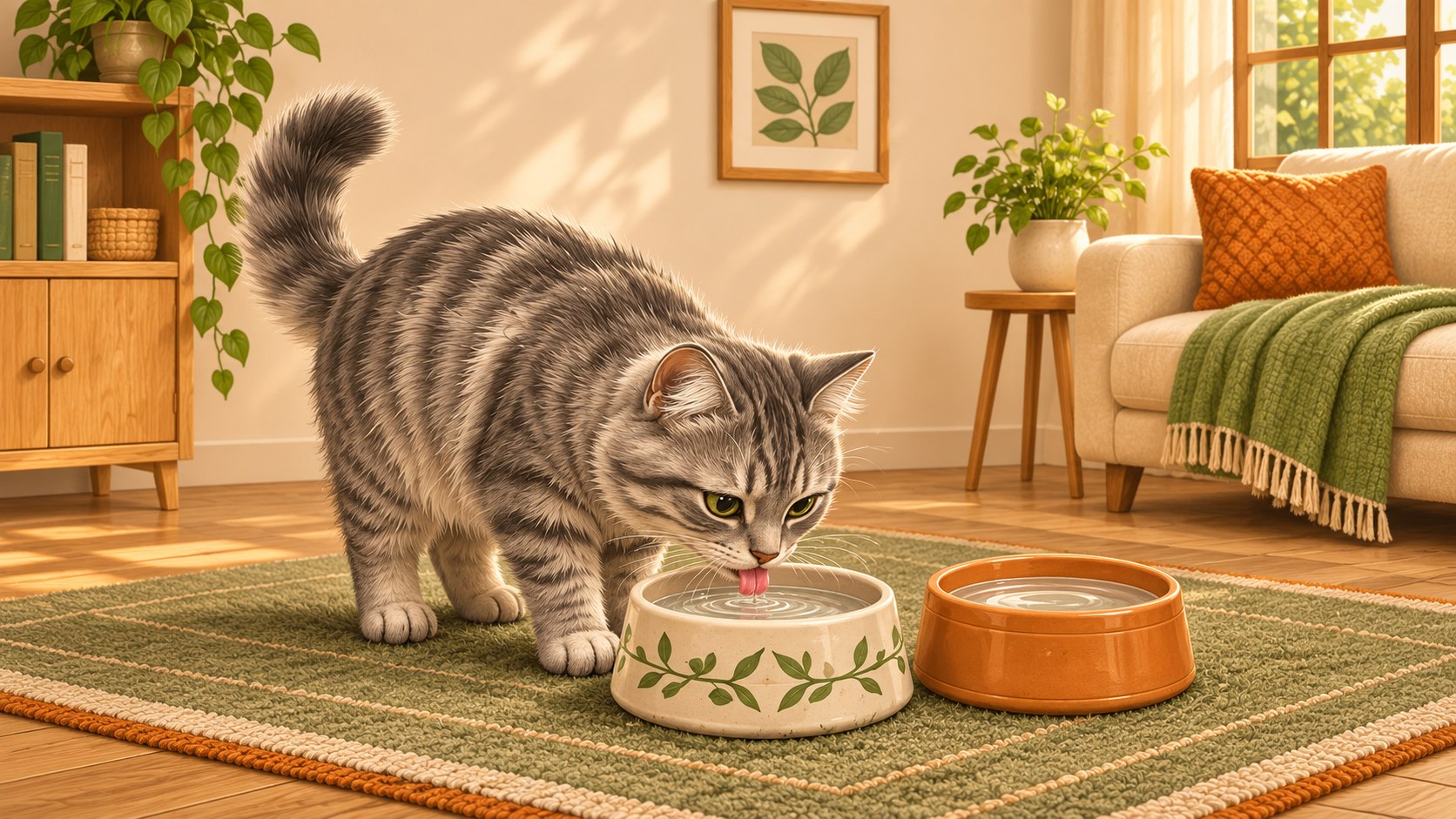
You have your keys, phone and bag. Your cat has the expression of a tiny landlord wondering whether the catering arrangements meet the lease. A leaving your cat home checklist helps you check the things that matter before you head out: fresh water, suitable meals, a usable toilet, safe activities and a plan if you are delayed. This guide is for preparing an ordinary absence, not making a weekend alone acceptable with a mountain of kibble. We will separate useful purchases from things you can do with what you already own, because your cat needs good care more than an impressive collection of connected devices.
First, Decide Whether Your Cat Needs a Person
Before setting out another bowl, consider your cat’s age, health, feeding schedule and experience of being alone. A healthy adult accustomed to your workday has different needs from a newly arrived kitten or a cat requiring medication. Cats Protection’s advice on leaving cats alone gives around twelve hours as an occasional upper limit for many adult cats, rather than a routine target. It advises closer checks for kittens, older cats and cats with medical or other complex needs. Your own cat may need company or care much sooner.
If the outing will exceed the care your cat can comfortably manage, arrange a trusted person before leaving. Do not calculate the length of an acceptable absence from the advertised capacity of a feeder. A large hopper answers how much food fits inside a machine, not whether someone will notice a sick cat or a spilled bowl. For overnight trips, repeated long days or uncertain return times, make an actual care arrangement. If you are unsure what is appropriate for a health condition, ask your veterinarian rather than treating a generic checklist as an individualized care plan.
Your Leaving Your Cat Home Checklist at a Glance
Walk through the rooms your cat will actually use. Check access as well as supplies: a freshly cleaned litter tray behind a closed door is an excellent facility in a location your cat cannot reach. The table is a practical walk-through built from the care guidance linked in this article. Add any veterinary instructions and household-specific needs. You can copy it into your phone, print it or keep a handwritten version by the door; the cat will judge all three with equal seriousness.
| Area | Check Before Leaving | If Something Goes Wrong |
|---|---|---|
| Water | Clean, fresh water in accessible, stable locations | Leave a separate bowl if a fountain stops or one bowl spills |
| Meals | Normal portions and a safe plan for the next meal | A named person can provide care if you are delayed |
| Toilet | Scooped trays and an open route to them | Caregiver knows where supplies are |
| Activity | Familiar, intact toys appropriate for unsupervised use | Remove any toy your cat damages or tries to swallow |
| Rest and safety | Comfortable resting options, secure hazards and safe room access | Caregiver has entry instructions and emergency contacts |
Give the check a repeatable order, such as kitchen, litter area, living room and exit. That is our suggested routine, not a scientifically tested sequence. Its purpose is to make an overlooked room easier to notice when you are distracted. If someone interrupts you halfway through, return to the last room you finished. A short routine you genuinely follow is more useful than a magnificent spreadsheet nobody opens until they are already on the train.
Water: Give the Backup Bowl a Job
Refresh the water and check that your cat can reach it without squeezing past a noisy appliance or another cat. In a shared home, notice whether one animal blocks another’s usual route. The AAFP and ISFM feline environmental needs guidelines recommend multiple, separated resources, including water, food and resting places. More than one usable water location also gives you a practical fallback if a bowl is knocked over. Put bowls on stable surfaces rather than balancing one on a shelf because the photograph looked charming.
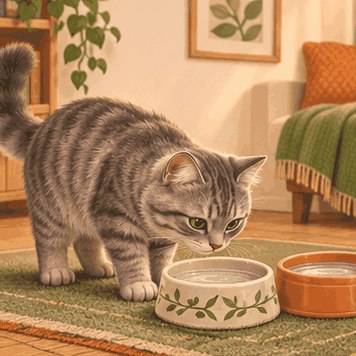
If your cat already uses a fountain, check its water level, normal flow and cleaning requirements. A pump humming is not proof that clean drinking water is available. Keep a separate ordinary bowl accessible, and do not introduce a new fountain for the first time as you leave for a long day. Your cat may decide the bubbling newcomer requires a full investigation. Observe them using any new setup while you are home before depending on it.
Food: Schedule a Meal, Not a Buffet Emergency
Work around your cat’s established food and portion plan. Avoid adding a large pile of treats to compensate for being out, particularly if your cat has a prescribed diet. Write down when the next meal is due and who will provide it if you cannot return in time. That simple question is more useful than assuming your cat will ration a banquet with the restraint of a financial adviser. Some cats will investigate the entire provision immediately.
Wet food needs a food-safety plan, not an optimistic lid. The FDA’s pet-food storage guidance says to refrigerate or discard unused or leftover canned and pouched food promptly, and to clean feeding equipment. Follow the food manufacturer’s handling instructions and any veterinarian-directed feeding plan. Do not leave a day’s wet meals uncovered and assume they remain suitable until dinner. If you use a chilled feeder, follow its particular time, temperature and food instructions rather than assuming every ice pack provides equivalent protection.
Litter: The Door Matters as Much as the Tray
Scoop before leaving and confirm the route to every tray stays open. Check doors that swing shut, a laundry basket that blocks the entrance and equipment someone moved during cleaning. This is especially worth checking in a busy household where everyone believes somebody else knows where the cat toilet went. Our litter box setup guide covers location, access and choices in more detail. Keep familiar litter and arrangements rather than launching a complete bathroom renovation on the morning of an important outing.
Leave the scoop and waste supplies where a caregiver can find them. If a tray is difficult for your cat to enter or consistently avoided, address the underlying issue instead of adding a scented product and hoping for a diplomatic resolution. A mat can help organize the surrounding area, but it does not make a dirty tray clean. If you shop, check litter scoops with holders for convenient storage or easy-clean litter mats for your available floor space. Neither is essential if your current arrangement works.
Recreation: Leave a Cat-Safe Activity Menu
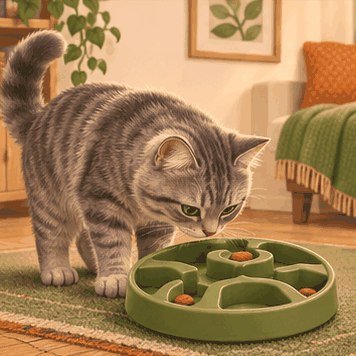
Offer activities your cat has already tried successfully with you nearby. A familiar food puzzle, an intact suitable toy and a safe place to look around can give them options without turning the room into an obstacle course. Cats Protection’s play guidance cautions against leaving cats with toys they could shred and eat or become tangled in. Put away wand toys, string and damaged pieces after interactive play. The fact that a toy is sold for cats is not a guarantee that your particular cat can use it alone.
Start food puzzles at a level your cat can solve easily. Watch them use the puzzle while you are home, check it afterward and use food from their normal allowance rather than adding an invisible second breakfast. Our cat enrichment ideas include ways to make indoor life interesting without buying everything at once. For shopping, compare beginner cat food puzzles by size, cleaning access and the manufacturer’s supervision guidance. For a named option, research the Catit Senses Digger. Catit describes removable cups for dry food or treats; check the current instructions and supervise initial use. Difficulty is not a contest your cat agreed to enter before lunch.
A Resting Spot Should Come With an Exit
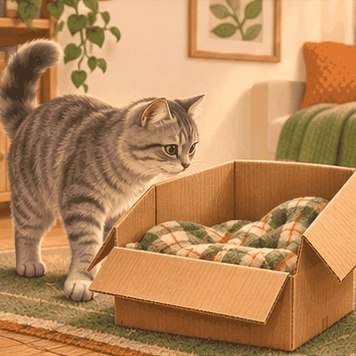
Keep familiar comfortable places available, including somewhere quiet to retreat. The RSPCA’s indoor-cat guidance emphasizes opportunities for resting, exploring and interaction, rather than treating food as the entire indoor experience. A box and a suitable blanket may be enough if your cat uses them safely. Remove handles, loose tape or materials they chew. A retreat is useful because your cat can choose it and leave it, not because you shut them inside a cupboard for peace and quiet.
If your cat enjoys a window view, check the resting surface and secure the window appropriately before you leave. A perch should be installed, inspected and used according to its instructions; the workday is not a sensible first test of its mounting. Our window bed buying guide explains the practical questions to ask. You can compare washable low-entry cat beds if a floor-level option better suits your cat. A new bed is an option, not a requirement to prove that you care.
If your cat ignores every resting option in favor of your sweater, our guide to why cats sleep on your clothes explores comfort, familiarity and safer alternatives. Check the material is suitable for your cat before leaving it available, especially if they chew fabric.
Do the Boring Safety Sweep
Scan for whatever your individual cat investigates: cords, discarded packaging, medication, cleaning supplies and small objects from your bag. The Cats Protection household safety guide is a useful room-by-room reference. Store hazards securely rather than moving them to a surface your cat can still reach. Check that the cat has not slipped into a closet or room you are about to close. Your own departure should not accidentally cancel access to water, litter or their usual resting space.
Consider the actual conditions expected while you are out, including weather and your home’s ventilation or temperature control. A comfortable room at breakfast may not remain comfortable later. If a known problem means the home cannot stay suitable, arrange another care solution rather than trying to solve it with a shopping link. Keep electrical devices set up according to their instructions, with cords secured appropriately. The checklist should make the home more predictable, not introduce three untested gadgets five minutes before departure.
Have a Delay Plan That Includes a Human
Choose someone who can genuinely enter the home and provide the care needed. Confirm access in advance, explain your cat’s routine and leave the carrier location and veterinary contact details. Cats Protection’s holiday-care guidance recommends visits at least twice daily when using a home sitter, with more frequent care for some cats. That is holiday guidance rather than permission to leave every cat between widely spaced visits. The arrangement should match the cat, and medication or special needs may require a different schedule.
A pet camera can show you part of a room, but it cannot refill spilled water, check a hidden cat or provide treatment. If you use one, decide who can respond when you see a problem; otherwise the device mainly lets you worry in higher resolution. Leave clear instructions for missed meals, a missing cat or an unexpected delay. Share sensitive access details directly with the caregiver, not in a public social-media comment or an article checklist.
Try a Practice Run While You Are Home
Before depending on a new arrangement, use an ordinary day to find its awkward parts. Set the feeder for a meal you will be present to observe, place the extra water bowl where you intend to leave it and offer the activity you selected. Watch without steering your cat toward every object. The useful question is whether they can use the setup as it stands, not whether you can persuade them to perform for a demonstration. Make changes afterward if something is inaccessible, confusing or ignored.
Write a brief household note that names the essentials and the person responsible for each. “Food checked by Sam” is clearer than a vague assumption that everybody saw the bowl. Include the return time and how to contact the backup caregiver if it changes. Revisit the note when your cat’s needs or the household schedule change, rather than collecting more tasks indefinitely. The finished routine should be easy for another responsible person to understand, including someone who has not followed every episode of your cat’s complicated relationship with the fountain.
When You Return, Check the Cat Before the Notifications
Look at your cat and the environment before assuming everything went as planned. Notice whether meals were available, water remained accessible and anything was damaged or moved. If your cat’s eating, drinking, toileting or behavior changes, contact your veterinarian as appropriate. Cats Protection’s separation-related behavior advice explains that changes after time alone have different possible causes. A loud greeting does not establish separation anxiety, and an online article cannot diagnose it.
Use what you observe to improve the next departure. Move a repeatedly spilled bowl, simplify a puzzle that proved frustrating or arrange more human care when your schedule changes. Keep the useful basics even if you buy an upgrade. The goal is not a home that looks like a pet-technology showroom: it is a cat with appropriate care, safe choices and someone who will act when plans go sideways. Your keys can go missing again tomorrow, but the cat’s water should already be handled.